killer of sheep (1978) dir. charles burnett
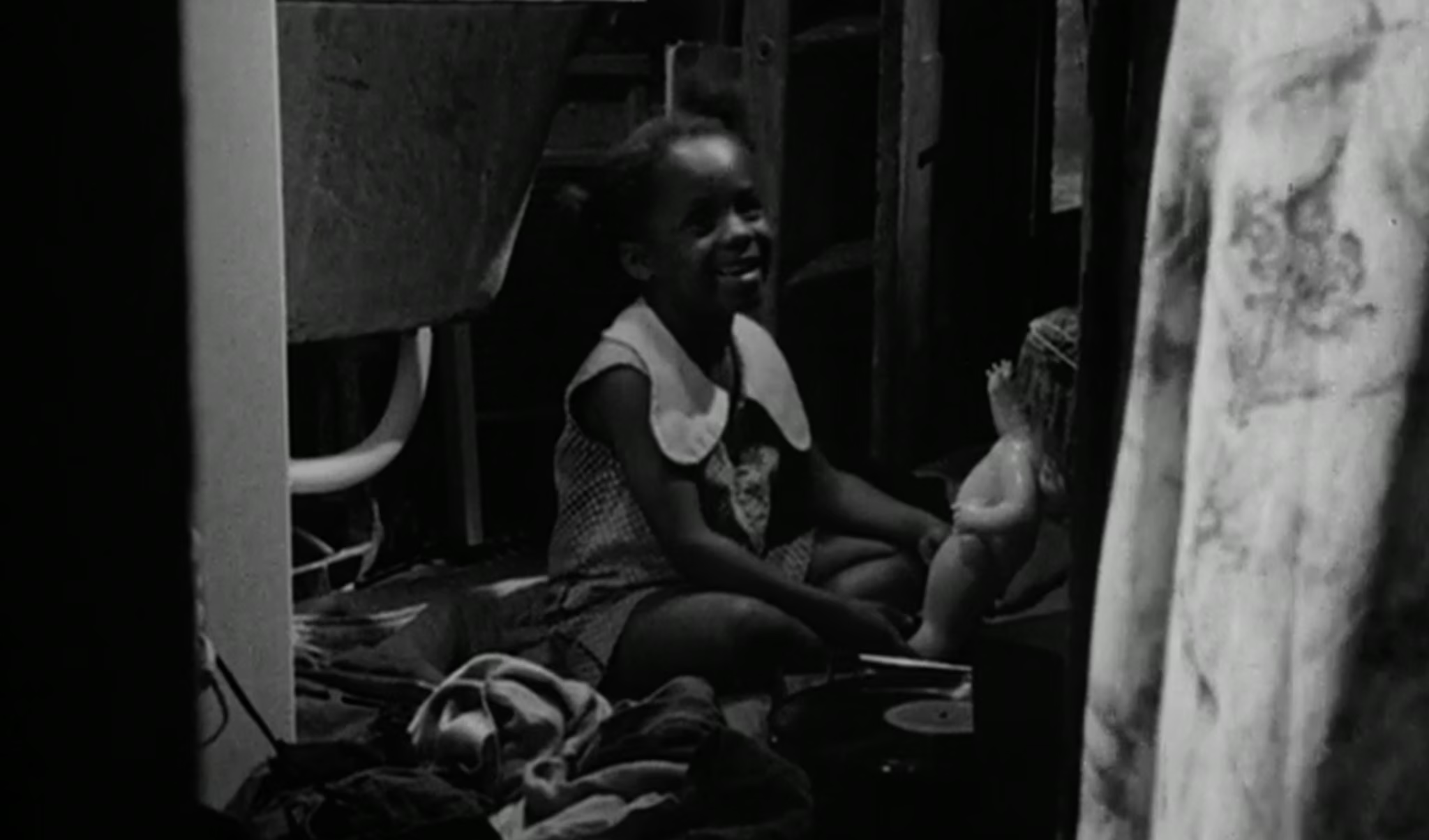
Charlie knows composition and he knows it well. Every still is worthy of museum display. Charlie shows some of the intricacies, the everyday mundanities of Black life. Nothing feels like caricature: all earnest. Even though there’s moments that are louder than others it’s never not taking itself serious, never poking fun at itself. His camera observes and by being the impartial watcher, he displays range. There's no plot destination and it works.
Burnett manages to brush up against so many dynamics by letting his film just Be. A large portion of the film depicts little black boys playing, thinking up games with the little that they got, not even aware they have little, just living in bliss. They pelt rocks at each other or like depicted in the film’s iconic imagery, jump from roof to roof, one misstep away from falling to their deaths but its normal not dramatized. With the screentime dedicated to boys carrying on, Charlie exhibits all the groomed toxic masculinity, the chest-puffing boys don't cry shit that comes with it.
He juxtaposes this “joyous” roughhousing with our protagonist, Stan, and his never-ending survival mode, working long painful hours in a slaughterhouse for less pay than deserved. Him and his wife at times seem distant, on different pages, trying to maintain adult black love under the strain of capitalism. His wife, a lady yearning for intimacy with her lover. Him, so bogged down from his day to day hamster wheel existence and his want to provide, No! His subscribed duty to provide, that he recoils at her touch, almost disgusted with himself and his positioning like he doesn't deserve her, too in his own head to realize that she just wants to feel wanted. He goes on one of those all day Man! million dollar money play missions and it goes to shit after all his work and whoring himself. Burnett shows the disappointment in self that comes with the swing and the miss to feed his family. Burnett even slips in Stan’s adamant declaration that he’s not poor as those Black people when all of them got the short end of the stick.
Burnett also highlights the inherited gender roles in one of my favorite scenes, where his son slams his chair into the dinner table after eating, rushing off to go play, and leaving his mess behind, while his lil sister clears both his and her plate politely and quietly. This scene concludes with the tenderness of the father toward the daughter smiling as he holds her in his hands while some scenes back the son receives a stern scolding for something seemingly so small that speaks to not only his but the community’s insecurities about their status. His son calls his mother Madea, a southern term of endearment for the matriarch of a family but Stan yearns to shed the “country” for the elitism of the city. This slight bit of dialogue sheds light on Black overcompensation as a result of white indoctrination. The need to escape what is “Black” because it’s been tainted by white optics. The unconscious desire to be closer to whiteness. It’s all there.
These presentations of everyday Black life in 1970s Watts, LA are all juxtaposed with the gorgeously dreadful process shots of sheep led to slaughter. A clear metaphor for his very Human subjects as they all seek to navigate a world not tailored to them.
Give us dat Real Chuck. Good Pain.
5/5 escape


.avif)